Showing posts with label currency wars. Show all posts

2016-09-27

Global Reserve Currency - Special Drawing Rights vs Bitcoin

Earlier this month, the G20 summit was held in China. One of the more interesting topics discussed, was the addition of Chinese yuan to the SDR - Special Drawing Rights. The topic of SDRs is rather important, but it doesn't seem to be discussed all that widely in the crypto community, so I figured I would cover it today.

Special Drawing Rights


Special Drawing Rights, or SDRs, are supplementary foreign exchange reserve assets defined and maintained by the International Monetary Fund (IMF). They were created in 1969. SDRs are allocated to countries by the IMF, and private parties do not hold or use them. The value of SDRs is based on a weighted basket of currencies (currently, 41% USD, 31% EUR, 11% CNY, 8% JPY and 8% GBP, worth about 1.39USD/SDR).

Special Drawing Rights are posed to replace the dollar as the world reserve currency. They serve well as a unit of account (due to lower volatility), can work well in international law (to have an objective measurement of value across multiple countries), and some countries even started pegging their currency to the SDR (due to increased transparency).

While the IMF and SDRs might not be an entirely ideal solution to creating a new, global currency (with US having a veto power and failing to ratify some reforms for example), it might be a step in the right direction.

Where SDRs fall short


While the Special Drawing Rights are an interesting idea, they fall short in a one key area - they appear to be inaccessible for anyone short of a government. This can limit how useful the currency can be for say, creating international settlement, or using it as a measurement of value for corporations or even individuals.

If SDRs were a publicly available and tradable currency, it would be really interesting to see it used for pricing items, wages, etc. to counter currency wars. If your wage is pegged at 3000USD/month, whether USD goes up or down, you're paid the same amount of dollars. But if your wage was instead set at 3000SDR/month, you would receive the same value each month, no matter if it meant you got 2500USD when the dollar is strong, or 3500USD when it was weak. This could give anyone a protection from the government's meddling.

Crypto SDRs


Creating a currency based on a basket of other currencies is also not an entirely new idea in the crypto space either. Paul Grignon (author of Money as Debt) has described his take on the idea as Digital Coin back in 2009. A part of the system, called Perpetual Coin, would initially be issued based on a value of a basket of currencies. Unfortunately, the project never left the conceptual phase, and the website is down now, so it is unlikely we will see it ever implemented...

Other than that, there doesn't appear to be an SDR-pegged cryptocurrency out there. This might perhaps be due to the fact that we already have a better alternative to the Special Drawing Rights - Bitcoin. What it lacks in stable value at times, it more than makes up in terms of being all-inclusive and, at least so far, immune from government influence.

It wouldn't be hard, however, to create an SDR-Coin - it could function like Tether, or perhaps more accurately, like BitUSD since you couldn't exactly withdraw the coin. The main problem for a centralised issuer would be keeping the valuation of the currency stable, especially in periods where the basket of currencies is adjusted. Other than that, once the currency itself is created (and I would almost bet we would see someone make the currency after the article is published - 700+ cryptos is not enough after all), it would be interesting to see it start being used internationally. Perhaps we would finally see what is the real demand for SDRs for corporations and real people, rather than just governments. With any luck, this might just hurry the demise of the USD or "petrodollar" hegemony.

Conclusions


Special Drawing Rights are an interesting take on creating a new global reserve currency. While it is currently only accessible to governments, it could be very useful for corporations and end-users. For the time being, Bitcoin is the most accessible alternative for the rest of us.

2014-12-22

The need for a new measurement of value

As many of you might be familiar, there are a few key functions money needs to perform in our society. While the exact list may vary, here are some of the functions listed:

  1. Medium of exchange
  2. Measurement of value
  3. Standard of deferred payments
  4. Store of value

Today, I would like to talk to you about the measurement of value function of money in the context of the "Currency Wars".

Measurement of value


Money being used as the measurement of value (or a unit of account) means that we use the money units to denominate how much other things are worth. It is useful to have this standard reference because then we can compare things that would be otherwise hard to compare. While it might be easy to estimate that a loaf of bread is worth about a few buns, since they both fulfil a similar role and are essentially interchangeable, it is much harder to compare how many loafs of bread would be equivalent to a book in a pure barter system.

With money, everything is compared to the same unit of money, be it dollars, euros, bitcoin or otherwise. As such, everything has its own price and all of the prices are easily comparable, making everyone's life that much easier.

Currency wars


The topic of currency wars is rather big, and I don't think this post will do it justice. I recommend the book "Currency Wars" by James Rickards to learn more about this subject.

The short of it is, that a currency war, also known as competitive devaluation, is a competition between countries to achieve a relatively low exchange rate for one's own currency in comparison to everyone else. While at first it may sounds like a silly idea, after all, the stronger your currency is the more you can buy after all, it does make sense when you think about the state of your domestic industry.

If one's currency is going up in value relative to everyone else's, you will have more imports (you can buy more), but less exports (your products will become more expensive for everyone else and thus less attractive). In order to stay competitive on the global market, you want to reduce the cost of producing your goods. You can either do that through a long process of technical innovation and so on, or you can go the fast route and make your currency worth less. Since your money will be worth less, the wages you have to pay your employees are smaller, the cost to run your company are smaller, and thus your product gets cheaper.

This can be quite insidious, as it essentially means cutting everyone's wage without their consent or knowledge. One dollar today is worth less than one dollar last year and so on. Here is some rough overview of how much $1 is worth as expressed in 1913 dollars:


New measurement of value


As the money all over the world is fluctuating in value, its use as a measurement of value is a bit ridiculous once you think of it. You could compare it to trying to measure a height of a wave on a stormy sea in relation to other waves. We need a new form of measurement of value that would form a solid ground amidst the currency wars storm.

The reasoning as why we would want something like this is simple - for a lot of people, they would want to be earning the same value performing their jobs and pay the same value for their goods and services, no matter how much their local currency is fluctuating. This would allow them to detach themselves from the monetary policy of their countries that are doing their best to run it to the ground. Having an absolute measurement of value would promote real growth and innovation in becoming more and more competitive, rather than fake growth brought about through inflation.

As for what this measurement would be, this might be a bit complicated. If it was a commodity like gold, everyone would start hoarding it and its value swings would affect the economy. It cannot be a national currency, since those are too easily printed and manipulated. It cannot be a currency like Bitcoin, since it can be too easily gamed through a cycle of hoarding to increase its value and releasing to flood the market. I doubt there is anything that could be used as money in traditional sense that could be used for this purpose.

At the same time, none of this matters if we don't make it a currency. If instead, we take the VALUE of anything, be it $1 today, 100 years ago, 1BTC from January 1st 2015, or some handful of magical beans, and use that VALUE as a new standard for measurement of value of everything else, it would become like a metre stick (of for folds on imperial system, a yard stick) for the economic world. A metre is not a measurement of anything in particular, it's not a metre rod of iron, or a metre of water, it's a metre no matter what it's measuring. Similarly, our new Value Stick could be use to measure how much a dollar is worth and how much a euro is worth without actually being anything in particular.

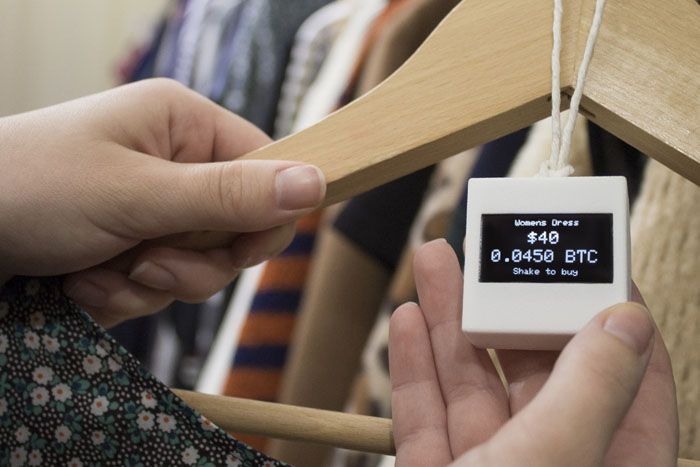
So instead of seeing tags with dollar prices, we could see tags with Value prices, and an exchange rate of Value to dollars or any other currency, perhaps computed on the spot, like in BitTag:


Conclusions


In a world where countries go out of their way to change the value of their currency, we need a new standard for the measurement of value that is independent of any national currency, commodity or otherwise.